Leash Training a Havanese: Pulling, Lunging and Loose-Leash Walking
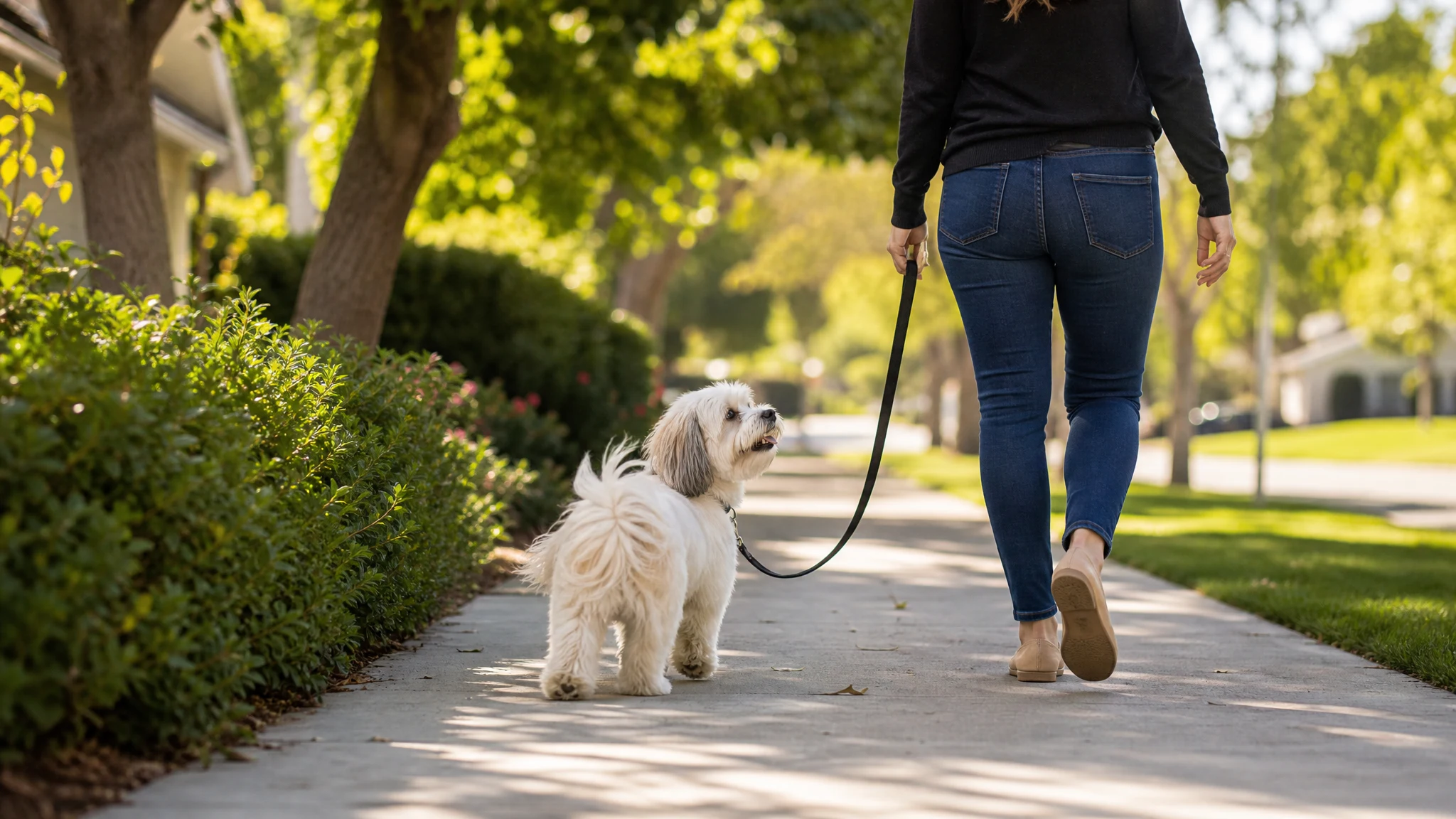
General training information. Every dog is an individual; for health or behavior concerns, see your veterinarian.
A Havanese on a leash can look like a fluffy little wind-up toy. Nose down, tail up, straight to the end of the lead. If that sounds familiar, you are not doing anything wrong. Pulling is one of the most common leash problems in any breed, and it is very fixable with patience and good timing.
This guide covers Havanese leash training from the first day to walks with distractions. It also covers lunging at triggers such as other dogs, bikes and squirrels. Everything here is reward-based, in line with the American Veterinary Society of Animal Behavior (AVSAB) position that humane methods are the right way to train.
Why Havanese Pull on the Leash
Havanese pulling on leash usually comes down to simple learning. The dog pulls, the walk moves forward, and pulling gets rewarded. Add a fascinating smell or a passing dog and the lesson sticks fast.
The breed's background helps explain the other side of it. The Westminster Kennel Club describes the Havanese as a Toy group dog from Cuba, and Purina describes the breed as a pampered lap dog and companion of the aristocracy. These were dogs bred to be with people. The United Kennel Club (UKC) standard describes a friendly, playful, alert and intelligent dog that is attentive to the handler. That attention is the best tool you have for walking nicely.
The Westminster Kennel Club rates the breed 4 out of 5 for trainability and 3 out of 5 for energy. Vetstreet says the breed is easy to train and recommends starting the day the puppy comes home. Individual dogs vary, so treat those ratings as a general guide and not a promise about your dog.
Two other points matter on walks. Westminster rates barking at 4 out of 5, and Vetstreet notes the bark is not yappy but sounds like it comes from a bigger dog. So lunging may come with a lot of noise. Also, Purina notes the breed does not like to be left alone. A dog that is eager to be near you may also get overexcited when the outside world gets exciting.
What You Need
- A flat collar for ID tags, or a well-fitted harness. Choose what is comfortable for your dog.
- A front-clip harness if your dog pulls hard. The leash attaches at the chest, so pulling turns your dog sideways instead of rewarding forward motion.
- A standard 4 to 6 foot leash. Avoid retractable leashes, which teach dogs that pulling extends the walk.
- Small, soft, high-value treats that your dog can swallow quickly. Think pea-sized.
- A treat pouch so rewards are always ready at your hip.
- A quiet place to start, such as a hallway, living room or fenced yard.
Skip prong collars, choke collars and shock collars. They work by causing discomfort, they can make fearful or reactive behavior worse, and they are not part of humane, reward-based training. Never jerk or yank the leash either.
If your dog coughs, gags or seems sore around the neck on walks, talk with your veterinarian before continuing. The Havanese Club of America lists orthopedic issues such as patellar luxation among the breed's health concerns, so any limping or skipping on walks is also a question for your vet.
How to Leash Train a Havanese, Step by Step
Short sessions work best. Aim for a few minutes at a time, and end while your dog is still keen.
Step 1: Make the gear a good thing
Let your dog sniff the harness or collar, then feed a treat. Put it on, feed a few more treats, then take it off. Repeat over a few days. Clip the leash on indoors and let your dog drag it under supervision while you play or feed treats. The goal is a dog who gets happy when the leash comes out.
Step 2: Teach your dog to stay near you indoors
With the leash on, stand still and drop a treat by your left or right leg, whichever side you want your dog to walk on. Pick one side and stick with it. Your dog will start to hover near that spot. When your dog is there, say "yes" and feed at your leg. This is the foundation of the walk.
Step 3: Add one step at a time
Take a single step, and if your dog follows and the leash is loose, say "yes" and treat at your leg. Then two steps. Then five. Keep the leash in a relaxed "J" shape. If the leash goes tight, stop moving and wait. Do not pull back.
Step 4: Practice the "stop and wait" rule
This one rule does most of the work. If the leash is tight, you stop. The moment your dog steps back toward you or the leash slackens, say "yes" and walk on. Your dog learns that a loose leash makes the walk go and a tight leash makes it stop.
You can also turn and walk the other way when the leash tightens. Do it calmly and without any leash pop. Reward your dog when it catches up beside you.
Step 5: Move to the yard, then the street
Repeat steps 2 to 4 in a low-distraction outdoor spot. Expect to go back to feeding more often. New places make every skill harder. Start the real walk with a moment of calm: ask your dog to sit, wait for attention, then head out.
Step 6: Thin out the treats gradually
As your dog gets better, reward less often, but keep it unpredictable. Real-life rewards count too. Sniffing a favorite bush, greeting a friend or heading toward the park can all be rewards for walking politely.
Loose-Leash Games to Practice
Games make the skill stick without feeling like a chore. Try these for a few minutes each day.
- Treat scatter: Toss a few treats on the ground, then walk on. Your dog learns to look back at you after sniffing.
- Name game: Say your dog's name on walks. When your dog looks at you, say "yes" and treat. This builds the attention that the UKC standard says the breed offers its handler.
- Direction changes: Walk in a zigzag or a figure eight. Reward your dog each time it follows your turn on a loose leash.
- Sniff breaks on cue: Pick a spot and say "go sniff." Your dog gets to be a dog, and you get a reward that is easy to deliver.
- Speed changes: Walk fast, then slow, then stop. Reward your dog for matching you.
Purina suggests the breed needs about half an hour of exercise daily, with varied walks. Mixing in games and sniffing time helps meet that need while keeping your training sessions short and fun.
Dealing with Lunging at Triggers
Lunging is different from ordinary pulling. A dog that suddenly strains and barks at another dog, a bike or a person may be excited, frustrated or worried. The training approach is the same in each case: create distance and teach a new, calmer habit.
- Find your dog's threshold. This is the distance at which your dog notices the trigger but can still take a treat and respond to you.
- Stay under it. Cross the street, turn around or step behind a parked car before your dog reacts.
- Pair the trigger with treats. When your dog sees the trigger calmly, say "yes" and feed a steady stream of treats. When the trigger moves away, the treats stop.
- Teach a U-turn. Say "this way" in a cheerful voice, turn, and walk away while feeding treats. This gives your dog a way out that does not need a scene.
- Reduce the distance slowly. Over many sessions, work a little closer only when your dog stays relaxed.
Do not scold, jerk the leash or punish barking. That can make your dog link the trigger with something unpleasant, which usually makes lunging worse. Scooping up a small dog in a real emergency is fine, but try not to make it your regular plan, since it can stop your dog from learning how to cope.
If lunging is intense, if your dog seems frightened, or if you ever see signs of aggression, ask your veterinarian for advice and consider working with a qualified reward-based trainer. Pain can also affect behavior, so a vet check is a sensible first step.
Common Mistakes to Avoid
- Moving when the leash is tight. Even a few steps teach your dog that pulling works.
- Training only on walks. Practice at home first so the skill is ready for the street.
- Going too long, too soon. Short, successful sessions beat long, frustrating ones.
- Using treats too rarely at the start. Pay generously while your dog is learning.
- Letting family members use different rules. Everyone should stop when the leash tightens.
- Using a retractable leash. It trains dogs to pull for more length.
- Skipping sniffing time. A walk with no chance to explore is hard for any dog to enjoy.
- Using punishment or aversive gear. It is not needed and can create new problems.
Tips for Success
- Walk after a short play session so your dog is a little less wound up.
- Keep the leash hand relaxed and close to your body.
- Choose quiet times and routes while your dog is still learning.
- Bring extra-tasty treats for harder spots.
- Keep your voice happy. A small dog that hears frustration may get more tense.
- For puppies, start right away. Vetstreet recommends beginning training the day the puppy comes home.
Leash skills fit into a bigger picture of manners and communication. For the wider plan, see our complete guide to training a Havanese.
What Results to Expect
Many dogs start to show less pulling within a couple of weeks of consistent, short practice, but timing varies a lot from dog to dog. Puppies, adolescents and dogs with years of pulling habits will all move at different speeds. Distractions, excitement and new places can bring back old habits for a while.
With steady practice, you may see more loose-leash steps, quicker check-ins with you and shorter reactions to triggers. Lunging often takes longer than pulling, and some dogs will always need some distance from certain triggers. Progress is rarely a straight line, and a bad day does not mean the training has failed. If you are stuck, a qualified reward-based trainer can help you tune your timing and plan.